
Searching Forsyth County Criminal Dockets
The public starting point is the North Carolina eCourts Portal. Open Smart Search. If a Forsyth court notice shows an exact record number, type it first. A party search helps when the number is unknown. One name can return several Forsyth public results. Add Forsyth as the location, and filter by case type, status, or filing date only when you must. The Portal view you land on is the Case Summary. It is also called the Register of Actions. For a Forsyth court-date question, use Search Hearings rather than a general session list. Pick Forsyth, a live Hearing Type, the matching Search Type, and a tight date range. You can also inspect criminal public records at the Forsyth Clerk of Superior Court. Use a self-service terminal or the public file where available. Remember that the Portal shows current information only. It is not an official or certified court record.
- Open the Forsyth eCourts Portal and choose Smart Search.
- Enter the exact Forsyth criminal record number, or a permitted name, then choose Forsyth as Location.
- Open the matching Forsyth public Case Summary and read charges, events, hearings, dispositions, and financials separately.
- Switch to Search Hearings when the immediate need is a future Forsyth setting.
- Ask the Forsyth Clerk for a public file inspection, paper record, or certified copy.
Note: A blank Forsyth public search can stem from input format, processing, a paper record, or a lawful access restriction.
Forsyth Criminal Search Fields
Forsyth Smart Search keeps the search term apart from the filters. Record Number or Name is the basic starting field. The Portal guide also supports configured search types. Examples include case number, party name, business name, and citation number. Trim a broad search with Forsyth Location. Narrow further by criminal or infraction case type, status, and filing date. Keep a basic term in the search box and refine a 200-result display from there.
| Portal field | Useful Forsyth criminal use | Reading caution |
|---|---|---|
| Record Number or Name | Use the exact Forsyth number first; otherwise use a permitted party name. | Copy a number from a Forsyth court notice rather than creating one. |
| Location | Select Forsyth to reduce statewide name matches. | Location is required for a hearing search. |
| Case Type and Status | Narrow Forsyth public criminal or infraction results. | Forsyth status labels need dated events for context. |
| Filing Date | Use a short range for a common Forsyth name. | Older Forsyth migrated records can require clerk follow-up. |
A current Forsyth eCourts number often looks like 26CR000123-330. The pattern runs year, case-type letters, and sequence. A local three-digit suffix comes at the end. Treat the example as format only, not a real case reference. Forsyth materials corroborate the local -330 suffix. Older Forsyth records can carry legacy codes. Exact input is still the surest route to a Forsyth public criminal docket.
Inside a Forsyth County Criminal Docket
Forsyth Case Summary information runs in chronological order. Yet no single line tells the whole story. Start with the case type and the date of the entry. Then tell a charge apart from a hearing. Separate a request from an order. Separate a disposition from later activity. The Portal sections sort case information, assignment information, and parties. They also keep events, hearings, charges, dispositions, and financials from blurring together. A charge is only an allegation tracked in the case, not a finding. A listed Forsyth hearing shows a proceeding was set, not what happened there.
| Case Information | Forsyth identifying and status information. Read later Forsyth events before drawing a conclusion from a status field. |
|---|---|
| Charge | A Forsyth criminal count or allegation. It does not establish a conviction or other finding. |
| Case Event | A dated Forsyth filing, setting, or court action. A short event name can require clerk clarification or an available public document. |
| Hearing | A past or future Forsyth proceeding. Search close to the date because changes can occur. |
| Disposition | A recorded Forsyth outcome or status. Check the correct count and date before reading it with other case events. |
| Financials | Forsyth amounts or balances where shown. Payment eligibility is a separate question. |
The state expunction guidance shows why a public display deserves a careful read. A status like pending expungement does not mean expunction has been granted. That official guidance also covers access limits that remain part of any Forsyth criminal docket search.
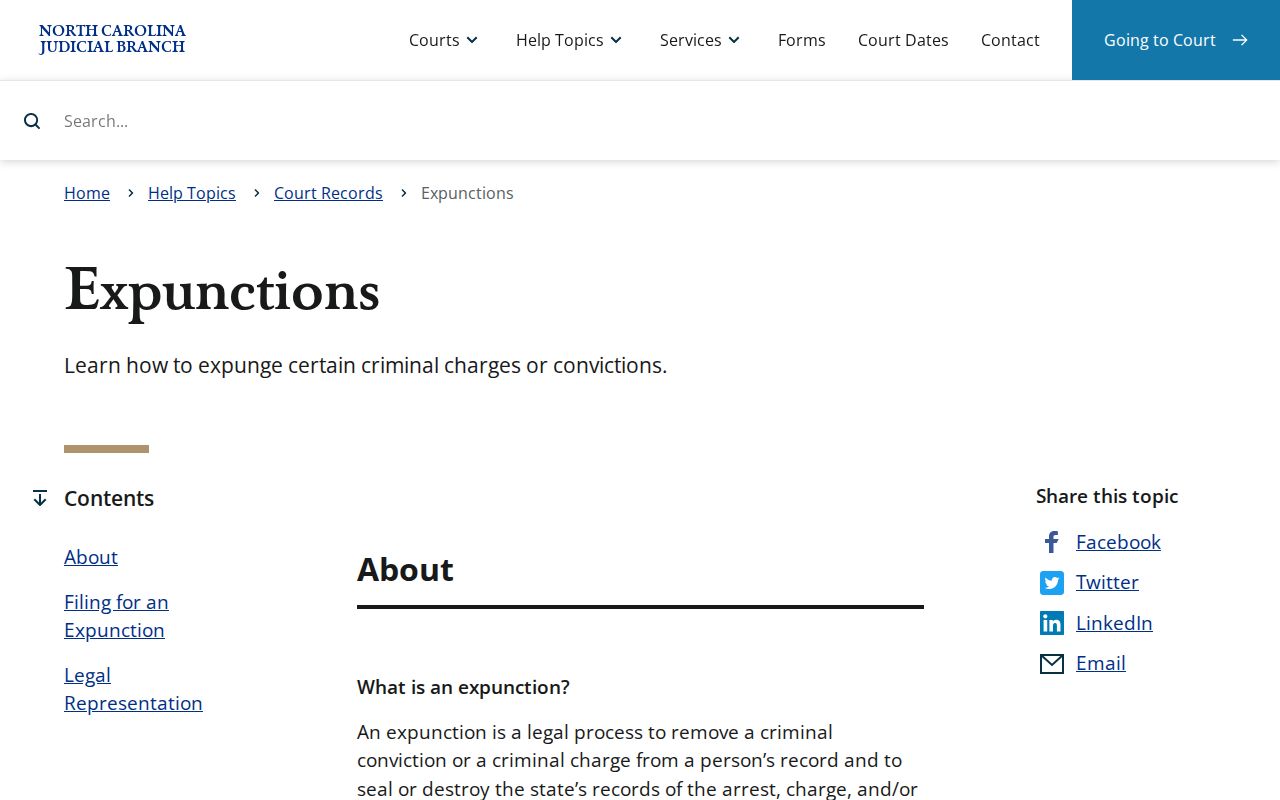
The source supports a restrained reading of public case information. An unavailable entry is not proof of any particular result or history.
Forsyth Criminal Docket Status Terms
Forsyth criminal status values in the Portal are system fields, not plain-language rulings. The Portal guide lists examples such as Pending, Disposed, Completed, Archived, Appealed-Appellate, and Remanded. Other examples include Transfer to Another County, Transferred to Superior Court, Voluntarily Dismissed with Leave, Pending-Reported to DMV, and Pending Expungement. Do not treat those labels as interchangeable. A disposed Forsyth case can still see later activity. An appeal or transfer can mean a related record now sits in another court.
- Transferred to Superior Court
- A process change showing movement to that division, not a description of an allegation or outcome.
- Remanded
- A procedural change that can return a matter for action after review.
- Pending Expungement
- A Portal status that does not establish that an expunction has been granted.
- Disposed
- A status that is not the same as an absence of later post-disposition activity.
Read the chronology in order. Find the relevant charge or issue. Then find the dated event, then the hearing or disposition. Check whether later activity changes the earlier entry. That discipline matters in Forsyth. A criminal matter can have several hearings and can move between court levels. The public Case Summary is a useful chronology. When you need the precise record, the official clerk document is the right source. The North Carolina expunction statute governs when a case record may be expunged.
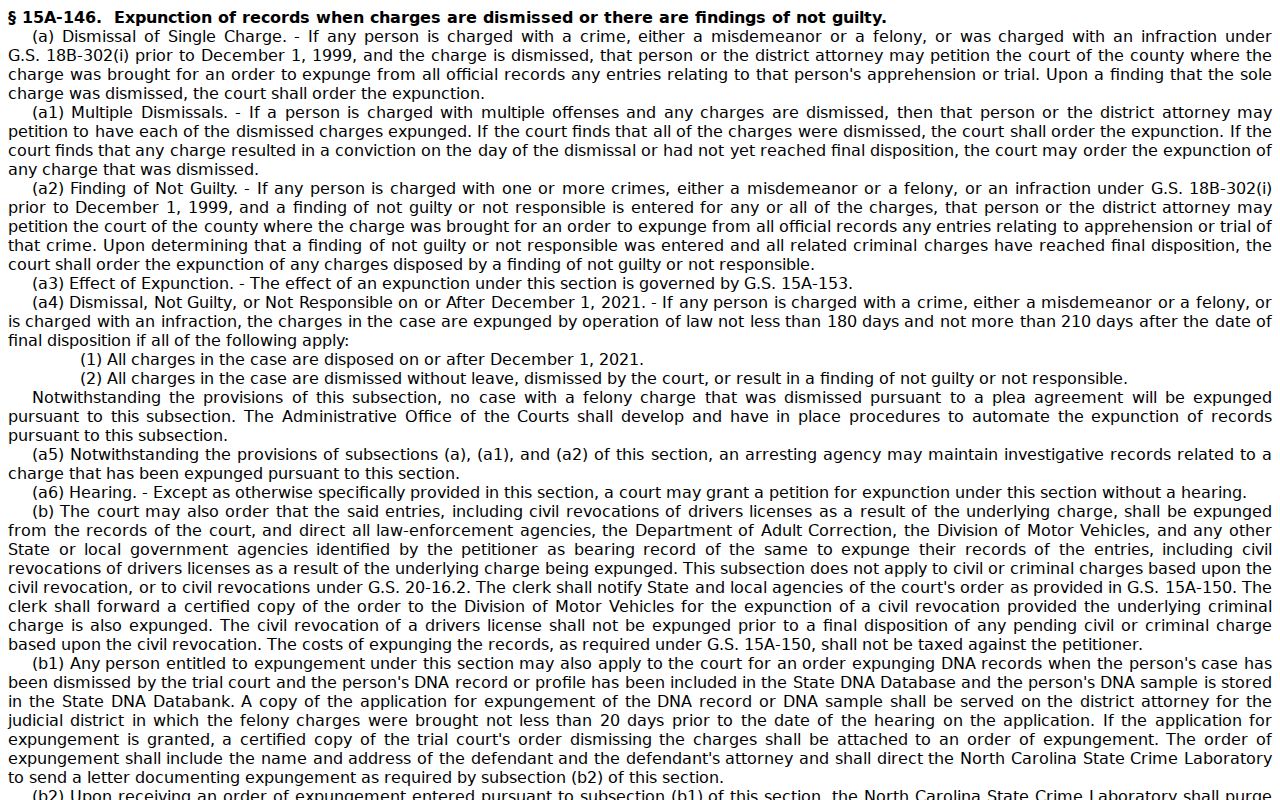
Its presence marks the line between a procedural status and a final, certified record decision.
How a Criminal Case Moves
A Forsyth criminal docket can record an early charge, later hearing settings, and a case outcome. That record builds over time. The sequence varies by case. Entries should not be used to predict what comes next.
A basic process line helps sort each entry. Stages include filing or charge, arraignment, pretrial work, plea or trial, disposition, and sentencing where applicable. A calendar entry is one part of that process, not a result.
Criminal docket flow: Filing or Charge › Arraignment › Pretrial Setting › Plea or Trial › Disposition › Sentencing.
Chasing a Forsyth hearing date? Start with the live tools, not old mail. Search Hearings and the current Case Summary will beat any printed notice that predates a continuance, a new setting, or a transfer. The criminal docketing plan is useful background, nothing more. What actually controls is the public record, the current order, and what the court office tells you about the setting.
Forsyth Superior Criminal Calendars
Felonies in Forsyth belong to Superior Court, District 31. The county's posted criminal docketing plan assigns the Superior criminal calendars to the District Attorney, who prepares them with case tracking. Expect a representation calendar early in each criminal session. After an indictment or information, the plan lays out a first, second, and trial-setting cadence. It also calls for administrative and trial calendars. Those come at least 10 working days before each setting. These timelines describe court administration, though, not a promise about your case.
For scheduling context, the Forsyth Criminal Superior Court Case Docketing Plan is the document to read. For real routing, a current hearing search plus the Forsyth contact directory does the work. A dated plan cannot replace the live docket.
Note: A local timing target describes court administration. It does not set your hearing or trial date.
Courts That Hold Criminal Dockets
Forsyth County sits in North Carolina Judicial District 31. Misdemeanors and infractions usually land in District Court. Felonies go to Superior Court. Both divisions sit inside the unified General Court of Justice, and the Forsyth Clerk of Superior Court keeps the court file and issues official certifications. So start a public lookup in the Portal. The case type and its events tell you the division; there is no separate city criminal court to hunt for.
One case can leave footprints in both places. Early process may run through District Court, with later Superior Court activity or an appeal record attached. Watch the case number and court level to keep related records straight. The state's Types of Courts page is the dependable map of the trial-division split. A calendar entry shows one setting. The Case Summary shows the broader history.
Forsyth Criminal Record Copies
State court-records guidance lays out three ways to reach Forsyth criminal records. Smart Search and Search Hearings show current public information online. The clerk's office offers a public self-service terminal. The paper file is there for in-person review too. Want a certified, exemplified, or ordinary copy? Contact the Forsyth Clerk of Superior Court. Give the county and the case number. Add the document title, the approximate date, and the copy category you need. Official copies come through the clerk, never from a saved Portal screen.
The Forsyth court contact directory is the official page connected to this criminal docket image.
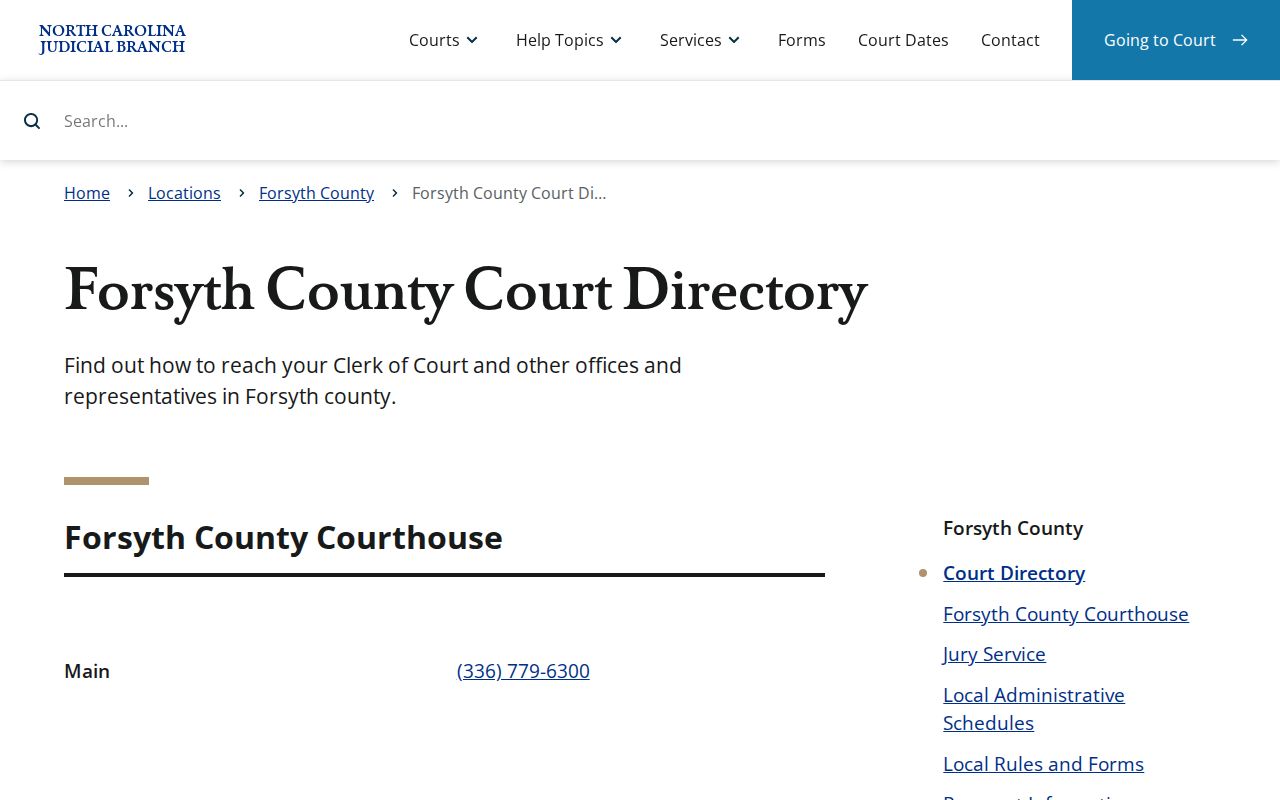
That directory splits public channels by office, including Criminal District, Criminal Superior, and Records. It helps route a record-specific question to the right desk. It won't turn the Portal into a certification service.
Fees come from the clerk fee statute. The first document page runs $2. Each additional page costs $0.25. A certificate under seal is $3, an exemplification $10, and a criminal-record search $25. Confirm the current fee and availability with the clerk. Do that before you send anything.
Sealed Dockets and Public Access
G.S. 7A-109 makes clerks keep dockets and indexes. It sets a public-inspection baseline during regular office hours, unless another law blocks access. The Portal needs no registration for public records. Registration, though, cannot override confidentiality, and the Portal display is not the clerk's official record. For a historical Forsyth case, the public self-service terminals and the local paper file can still matter.
Public-access limits: G.S. 7A-109 supports public inspection while preserving limits imposed by law. G.S. 7B-3000 restricts juvenile records. G.S. 15A-146 addresses specified expunction processing. Sealed, juvenile, protected, and expunged matters are not ordinary public-search results.
A gap in a search result or calendar means nothing by itself, so do not guess at protected facts. Check your input first. Then ask the clerk about lawful access to a specific Forsyth case. The juvenile confidentiality statute sets out what stays private.
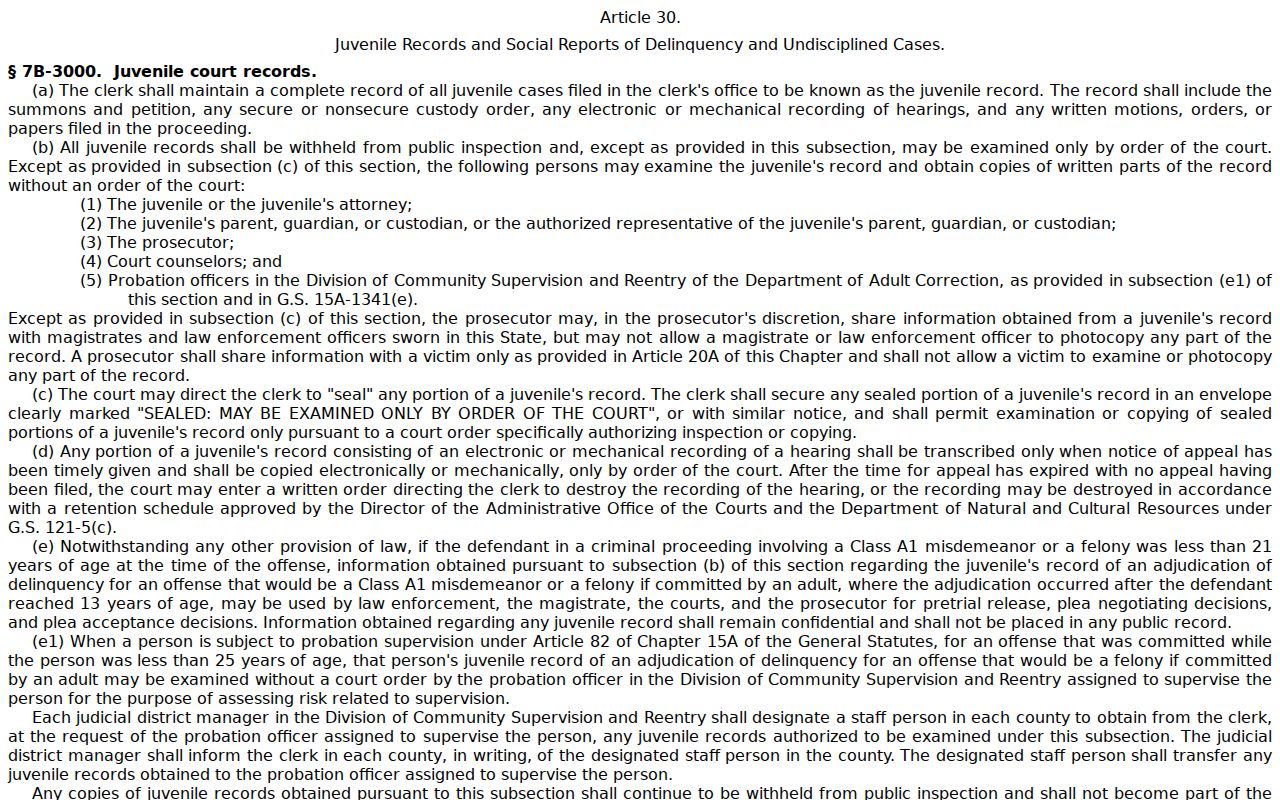
It draws the public-access line plainly. No alternate search path will surface a protected record.
Forsyth Criminal Docket Search Limits
An empty Portal result settles nothing about a person or a case. The official guide lists the usual culprits. Think input format, no matching record, legacy paper, processing timing, or a lawful restriction. Sealed judicial records stay out of reach. So do juvenile cases, protected proceedings, some warrant-related records, and expunged matters. That applies to ordinary public Portal users. The eCourts conversion left another wrinkle. Paper documents that existed at go-live remain at the clerk's office, so an older public record may still require a terminal or paper-file inquiry.
Forsyth joined the statewide Enterprise Justice system in July 2025. Newer public cases normally start with the Portal. The paper-record boundary is where the clerk takes over. The separate Forsyth County case lookup page covers general number and name searching, but no public search grants access to restricted records. Ask about an identified case only within the lawful access rules.
Keep the Forsyth case number handy. Verify the court division. Then send a Forsyth public-file question down the correct clerk channel.