
Searching the Clemmons Court Docket
Start with North Carolina's eCourts Portal. Smart Search is its public tool for case information. Type the exact case number if you have it, set the Forsyth filter, and click the underlined number to open the public Case Summary or Register of Actions. Need a Clemmons hearing date instead? Use Search Hearings, choose Forsyth and a live Hearing Type, pick the right Search Type, and keep the date range tight. The Portal serves public information well. For an official copy, though, go to the Forsyth Clerk.
- Open the eCourts Portal and select Smart Search.
- Enter a Clemmons case number or the Portal’s requested name format, then set Location to Forsyth.
- Review public case information, events, hearings, disposition, and visible financial fields without treating the screen as a certified record.
- For a Clemmons setting, use Search Hearings rather than a general Village calendar.
- Contact the Forsyth Clerk for public file inspection, a legacy-record question, or a certification.
Clemmons Court Docket Search in District 31
Clemmons counted an estimated 22,471 residents on July 1, 2024. Its court path still runs through District 31. The venue is the Forsyth County Courthouse. A Clemmons case takes many forms. It might be a traffic infraction or misdemeanor. It could also be a civil claim, family matter, small claim, estate, or felony. The division depends on the case type, not the Village address. Portal offers a public starting point for any Clemmons court docket search. The Clerk keeps the official local record. For the Village's own numbers, Census QuickFacts for Clemmons publishes the population profile.
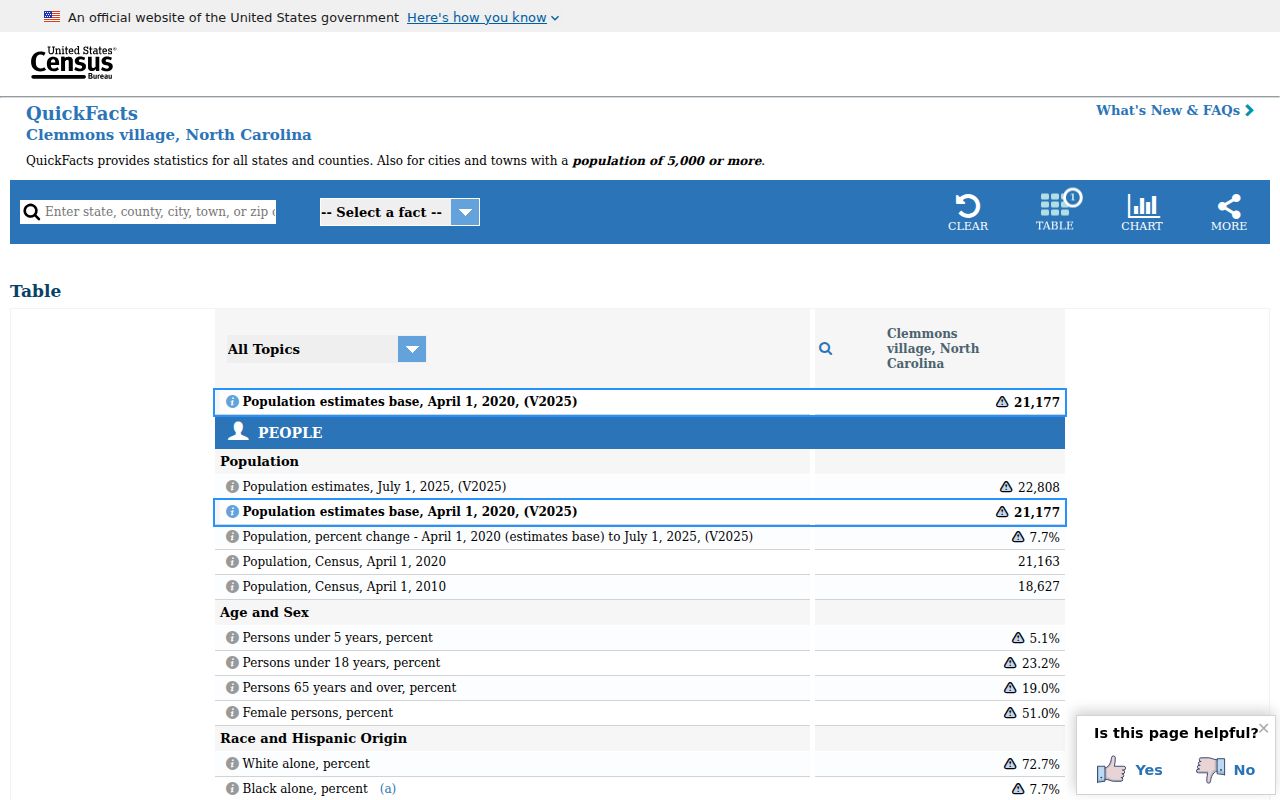
That profile describes the Village itself. The state Portal and the Clerk remain the actual court-record resources for Clemmons.
Clemmons Municipal Court Basics
Clemmons has no separate Municipal Court and no local judicial docket. Village Hall handles municipal administration there, but it is not a state court clerk's office. So a Clemmons traffic or misdemeanor question usually follows the District 31 state-court route. The only exception is a paper that itself names a separate Village administrative service. A court document does not become a Village record. An event happening in Clemmons is not enough.
For a public Clemmons case, use Portal. Need a filed court document, a certification, or a public terminal inquiry? Use the Forsyth Clerk. For Village administration, use the Village's own official channel. Keeping those roles straight prevents a false Clemmons municipal-court claim.
Clemmons Village Hall and Clerk Records
Two different offices hold these records. Village Hall at 3715 Clemmons Road anchors Village administrative records. The Forsyth state-court system holds any court case. Need a Village service, a local contact, or a Village-held record? Call the Village. Chasing a docket entry, a filed case paper, or a certified Clemmons court document? That needs the Clerk. For the local side, Clemmons Village Administration gives the official municipal contact page.
That Administration page is a municipal contact resource. It is not a Clemmons court and not a court-docket office.
Court Dates and Settings in Clemmons
A listed Clemmons court date is a state-court setting only. A continuation or reset can move it. Search Hearings is the official route to a current date. The Portal provides it. The Case Summary adds context about events. Forsyth schedules describe the broader sessions. A schedule entry is not proof that a Clemmons case is still assigned. Recheck the live record close to travel time. Follow the most current official notice.
| Date | The current Portal date for the Clemmons-related state case. |
|---|---|
| Time | The time listed in Search Hearings, subject to court changes. |
| Courtroom | A Forsyth courthouse assignment, not a room at Clemmons Village Hall. |
| Judicial Officer | The applicable official field if shown by the public system. |
| Setting Type | The dynamic Hearing Type selected in the live Portal search. |
Clemmons Civil and Small-Claims Court Path
Clemmons civil cases never go to a Village court. District Court generally handles civil actions of $25,000 or less. Superior Court generally handles those over $25,000. Magistrates and Small Claims sit inside the District Court structure. The state's small-claims guide describes a limit up to $10,000. Treat these thresholds as general jurisdiction orientation, not procedural advice for a specific Clemmons claim. Curious about other parts of the court system? North Carolina Recovery Courts covers the state's specialized programs.
District 31 programs are state-court resources for Clemmons residents, not a separate Village docket.
Traffic Tickets in Clemmons
A state citation in Clemmons belongs on the District 31 route. Save the exact number. Search Portal with Forsyth selected. Then use Search Hearings for the court date. State traffic guidance warns that payment eligibility is case-specific. An online payment option, when one appears, has limits. It does not replace a required appearance. It does not settle some other administrative matter.
If a Clemmons paper instead names a Village administrative service, follow the issuing agency's direction. Not every local traffic paper is a court docket. The countywide state-citation process is laid out in Forsyth traffic tickets.
Clemmons in the Statewide eCourts System
Forsyth joined the Enterprise Justice system in July 2025. That statewide conversion gives a Clemmons searcher one public Portal. It replaces a separate city docket. It also explains a practical split. A newer Clemmons case is likely to begin online. A historical paper record may still require a clerk or a self-service terminal. The Portal's Case Summary is current public information. It does not promise that every document image is online. The Adult Treatment Court page describes one District 31 program run under this statewide administration.
That District 31 program shows statewide court administration at work. It is not a court belonging to the Village of Clemmons.
Clemmons Mental Health Court Context
District 31 runs a Mental Health Court. A Clemmons resident with a state case might land in that recovery program. North Carolina's own listing names it Forsyth/District 31 Mental Health Court. Treat it as context only. It is not its own Clemmons docket. The public search route stays the same: the case's Portal record first, then the Clerk for official copies where access is lawful. The Mental Health Court page describes the District 31 program and its requirements.
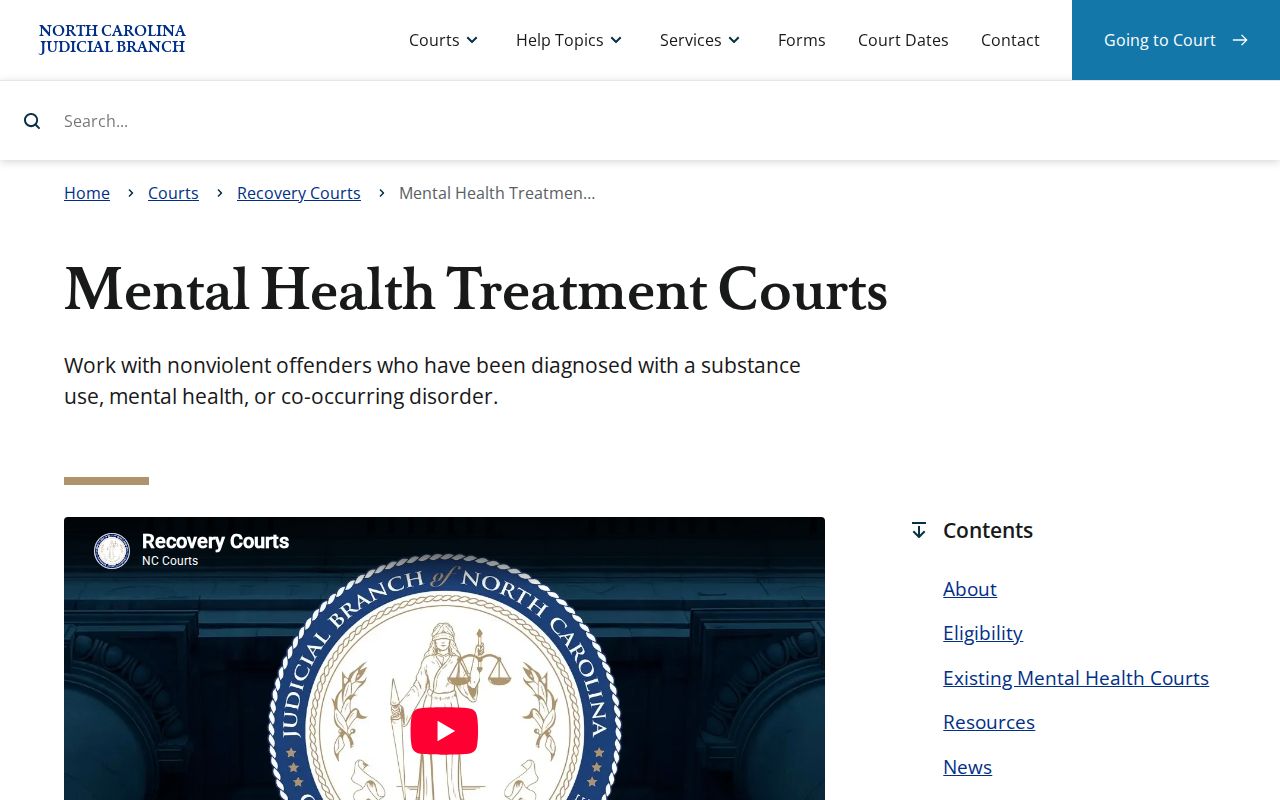
The listing is context, not proof that the Village runs its own specialized municipal court.
Where Clemmons Cases Go
No Clemmons Municipal Court exists for these cases. Clemmons matters flow to whichever North Carolina division has jurisdiction. District Court, District 31 takes traffic, misdemeanor, family, juvenile, and civil filings. Superior Court, District 31 handles felonies and the civil actions that qualify for it. Clerk proceedings, magistrate matters, and appeals are different. Each follows its own state route. Search by case type and case number. Do not assume a Clemmons court name.
Docket flow: Clemmons Village administrative issue or state case › Forsyth County Courthouse › District 31 division, magistrate, or Clerk
The Forsyth County court docket overview explains the courts and record channels in more depth.
Protected Clemmons Court Record Limits
A Clemmons docket search can come back empty. The reasons can have nothing to do with guilt or outcome. The record may be paper-only or unindexed. The entry format may not match your terms. Or a lawful restriction may block it. Juvenile, sealed, protected, expunged, and certain confidential matters never appear as ordinary public Portal results. Registering with the public system grants no wider reach. A blank result proves nothing about a person's history.
Search with the exact case number when you can. Ask the Forsyth Clerk only about lawful access to a public record. Never guess at restricted details from gaps in a Clemmons calendar or from missing case numbers.
Clemmons Court Record Access Rules
Access to Clemmons state-court records follows the clerk's public-inspection rule. Portal is the online channel for public information. For inspection in person and official copies, the local channels are the Forsyth Clerk and its self-service terminals. Need a certified or sealed document? Tell the Clerk which form you need. The Village's own record route fits Village administration, not a Clemmons case file held by the court system.
Key Rules:
G.S. 7A-109 sets the clerk’s docket and inspection baseline, subject to legal limits.
Court-record guidance identifies the Clerk and public terminals as local record channels.
AOC’s request page explains that it is not the custodian of individual county court documents.
A Clemmons Portal result is a public Case Summary or Register of Actions. It is not a Clerk-certified court file. Treat its entries as a dated sequence and learn to read them in order. Spot the case category first. Then tell apart the entry types. A charge or cause of action differs from a hearing, a case event, an order, a disposition, and a financial field. A listed Clemmons hearing tells you nothing about the outcome. A displayed amount does not prove current payment eligibility. Later activity can also change what an older line means.
Need an official Clemmons court copy? Give the Forsyth Clerk the county. Give the file number if you have it, the case caption, and the specific document. Say whether you want an ordinary, certified, or exemplified copy. Statutory baseline fees are $2 for the first page of each document, $0.25 for each additional page, $3 for a certificate under seal. An exemplification is $10. Those categories do not guarantee that a Clemmons record is instantly obtainable, so confirm the current cost, delivery method, and access status with the Clerk before you count on it.
Clemmons offers several lawful access channels, and each serves a different need. Portal Smart Search carries current public information. Search Hearings checks a listed date. For inspection, paper-file questions, and official copies, the Clerk office and its public terminal are the path. AOC's public-record route covers AOC administrative material, not a Clemmons individual case file. Keeping these routes straight stops a Village request, a court-file request, and an AOC request from being treated as interchangeable.
Forsyth moved to Enterprise Justice in 2025. A historical Clemmons file can raise both electronic and paper-record questions. A newer case should normally start in Portal. Paper documents present at go-live stayed available through the Clerk. If a search returns nothing, a permitted exact-number retry and a Clerk question about lawful access come next. A calendar gap, a missing name, or a result that is not public is never a reason to infer protected Clemmons facts.
Here is a routine that works. Save the case number from your notice, then look up public activity in Portal with Forsyth selected. Use Search Hearings only for a current date. Compare the case type and latest event before treating a result as the correct Clemmons matter. Then ask the Clerk for the official paper or certification when you truly need it. This sequence keeps public lookup, calendar confirmation, and official-copy work separate, and it keeps a court-file request from landing with Village administration.
Planning a courthouse visit? Confirm the current Portal setting first. A dated notice, an administrative schedule, or a payment entry is no substitute for live Clemmons hearing information.
For Clemmons residents, the Village label is a civic fact, not a judicial one. A Clemmons Village request belongs with Village administration. A Clemmons state case belongs with District 31, Portal, and the Forsyth Clerk. A hearing date is a state-court setting. A certified copy is a Clerk matter. Keeping these Clemmons routes separate keeps a local government contact from being mistaken for a court-record source. Every Clemmons court notice should be kept with its exact number before any search begins.